
STEPS Center FAQ on February 18 White House Executive Order
Learn more about key concepts from the EO in this STEPS Center FAQ publication.
On February 18, 2026, the White House published the Executive Order, “Promoting The National Defense By Ensuring An Adequate Supply Of Elemental Phosphorus And Glyphosate-Based Herbicides.” Learn more about key concepts from this EO in this STEPS Center FAQ publication. Our sources and suggestions for further reading can be found at the end of the FAQ. For a printable version of this page, please download this PDF document.
While there are many common uses for phosphorus, this EO only discusses elemental phosphorus used primarily for industrial, defense, and agricultural purposes (in particular, the herbicide glyphosate).
What does the Executive Order (EO) authorize?
This EO specifically authorizes the President (under the Defense Production Act) to develop federal contracts with private companies that supersede their current contracts related to elemental phosphorus and glyphosate. The Defense Production Act was also enacted during the COVID-19 pandemic to promote the manufacture of Personal Protective Equipment through private sector businesses.This EO also delegates oversight of that contracting process to the Agriculture Secretary to work with the Pentagon to ensure that industrial, defense, and agricultural uses and supply chains are intact. The EO also confers some immunity from liability under the Defense Production Act.
What is phosphorus? What is elemental phosphorus? How is it used?
Phosphorus is a chemical element and is essential for all living things. It’s a natural part of our bodies and found in molecules like DNA and structures such as bones. Phosphorus is usually bound to four oxygen atoms as phosphate (PO₄). Phosphate is a key component of agricultural fertilizer and in recent years has been used in lithium-iron-phosphate batteries common in many electric vehicles. Molecules made of pure phosphorus are called elemental phosphorus, which is highly reactive and used in munitions and other incendiary devices. Elemental phosphorus is also important in synthesis of flame retardants, detergents, and herbicides such as glyphosate.
What is glyphosate? How is it used?
Glyphosate is a synthetic organophosphorus molecule first used as an herbicide (weed killer) in the 1970s. It is among the most widely used herbicides in the USA. Previous liability concerns have been raised with regard to glyphosate’s environmental and health impacts. The EO confers some immunity on glyphosate producers to ensure adequate supply of this herbicide under the Defense Production Act.
How and where are elemental phosphorus and glyphosate produced?
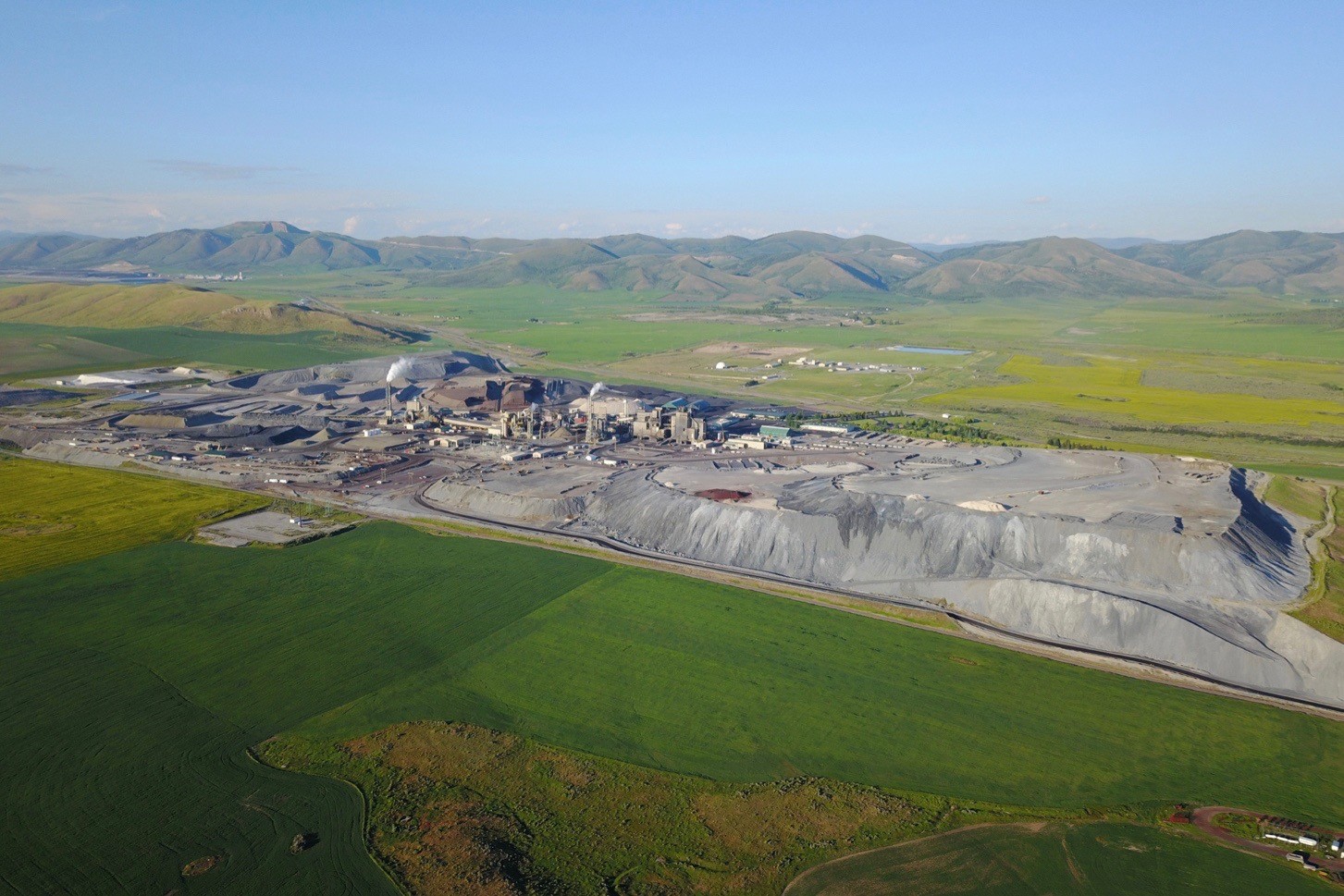
Elemental phosphorus and glyphosate ultimately derive from phosphate rock. The US produces significant amounts of phosphate rock domestically in Florida, Idaho, North Carolina, and Utah, meeting about 83% of its consumption demands, according to the USGS. Only a small percentage (<5%) of phosphate rock consumption is used to produce elemental phosphorus, which is made by heating phosphate rock to extremely high temperatures in the presence of other compounds. Domestically, elemental phosphorus is produced in Soda Springs, Idaho. Roughly 85% of US imports of elemental phosphorus come from Kazakhstan, per the World Bank. Glyphosate is chemically synthesized using elemental phosphorus and is combined with other inert ingredients to produce commercial herbicides, such as Roundup. Glyphosate is produced both domestically and abroad.
What challenges does the US face in phosphorus supply chains?
The global phosphorus sector is unique as phosphate rock reserves are limited to a relatively small group of large supply regions (e.g., Morocco). While the US is able to produce most of what it consumes domestically, it remains a net importer of phosphorus (including 6 million kg of elemental phosphorus annually), so US consumers are not insulated from global market shocks. Price volatility in phosphate rock and diammonium phosphate markets and other recent supply constraints induced by global shocks indicate potential risks to US phosphorus supply chains. The US is an important global agricultural production hub, relying on intensive agricultural operations that use phosphorus fertilizers and herbicide application for yield enhancement and crop protection, respectively. Phosphate rock was recently included on the US critical mineral designation list in part due to its overall importance to food security.
About the STEPS Center
The Science and Technologies for Phosphorus Sustainability (STEPS) Center is the world’s largest research center dedicated to studying phosphorus. The Center was established in 2021 with funding from the National Science Foundation and is headquartered at North Carolina State University. STEPS rigorously investigates the challenges and opportunities of phosphorus use and management in the United States.
Media Contacts
The following experts are available to speak with media for stories about the Executive Order:
Jim Elser (emeritus research professor, Julie Ann Wrigley Global Futures Laboratory, Arizona State University and adjunct research professor, Department of Applied Ecology, North Carolina State University). Expert on phosphorus biogeochemistry and overall patterns of use of phosphorus in human society. Elser can be reached at [email protected].
Jacob Jones (Director of STEPS Center and Kobe Steel distinguished professor of materials science and engineering, North Carolina State University). Expert in materials processing and inorganic materials. Jones can be reached at [email protected].
Jay Rickabaugh (assistant professor of public administration, North Carolina State University). Expert in policy and governance related to phosphorus. Rickabaugh can be reached at [email protected].
Sources/Further Reading
Baker et al. 2024. Global-to-Local Dependencies in Phosphorus Mass Flows and Markets: Pathways to Improving System Resiliency in Response to Exogenous Shocks. Environmental Science and Technology Letters 11(6). https://https://pubs.acs.org/doi/full/10.1021/acs.estlett.4c00208.
Benbrook, C.M. 2016. Trends in glyphosate herbicide use in the United States and globally. Environ Sci Eur. 28(1):3.
Elser, J.J., and P.M. Haygarth. 2021. Phosphorus: Past and Future. Oxford University Press, New York, USA.
U.S. Congress. 2025. Critical Mineral Resources: National Policy and Critical Minerals List. https://www.congress.gov/crs-product/R47982.
U.S. Geological Survey, 2025, Mineral commodity summaries 2025 (ver. 1.2, March 2025): U.S. Geological Survey, 212 p., https://doi.org/10.3133/mcs2025.
Van Bruggen, AHC, He, MM, Shin, K, Mai, V, Jeong, KC, Finckh, MR, Morris, JG (2017) Environmental and health effects of the herbicide glyphosate. Sci. Total Environ. 615: 255-268.
World Bank. (2024). U.S. imports of Phosphorus (HS 280470) from Kazakhstan 2019-2023 [Data set]. World Integrated Trade Solution (WITS). wits.worldbank.org